How Does Wedding Dress Sizing Really Work?
Wedding dress sizing is one more part of finding the gown that was meant to feel like yours, and your stylist is here to make the numbers easy. Bridal gowns follow different sizing guidelines than the clothes you wear every day, so it’s completely normal to order a size that is two or three sizes larger than your usual pants size. Every designer and every dress can fit a little differently, which is why we focus on your measurements, your gown, and creating the best possible fit for you.
Bridal Sizes Are Different From Everyday Sizes
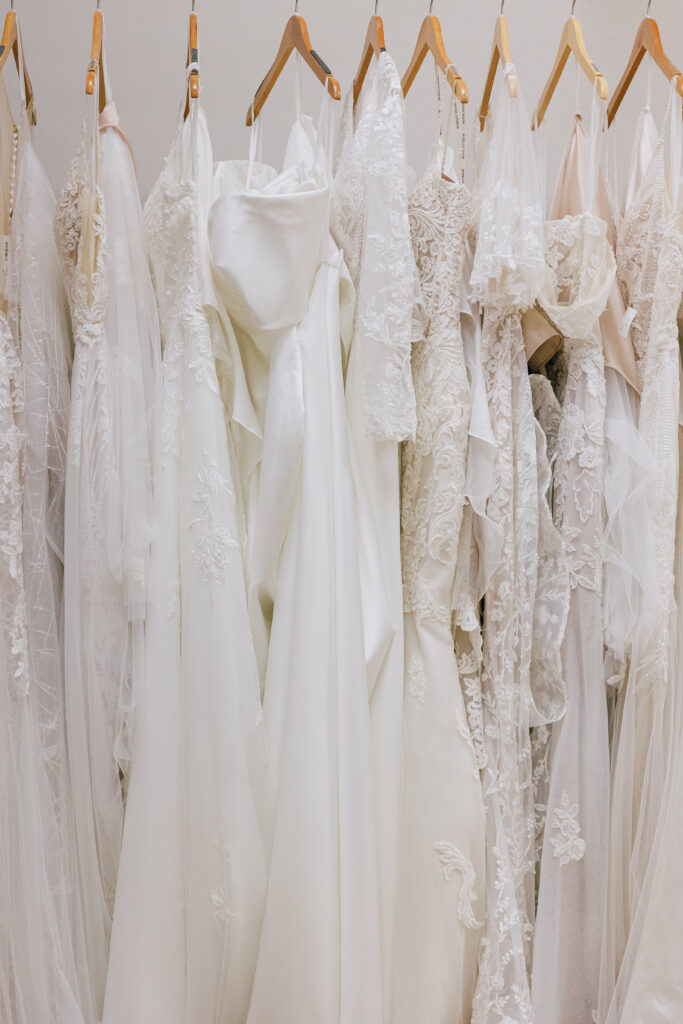
One of the most important things to remember is that wedding dress sizes do not translate directly to the clothes hanging in your closet. Bridal designers use their own size charts, and those charts can vary from one collection to another. You might fit comfortably into one size in one designer’s gown and need a different size in another. Rather than focusing on the label, your stylist will look at the measurements that matter for the specific dress you have chosen.
Your Measurements Guide the Decision
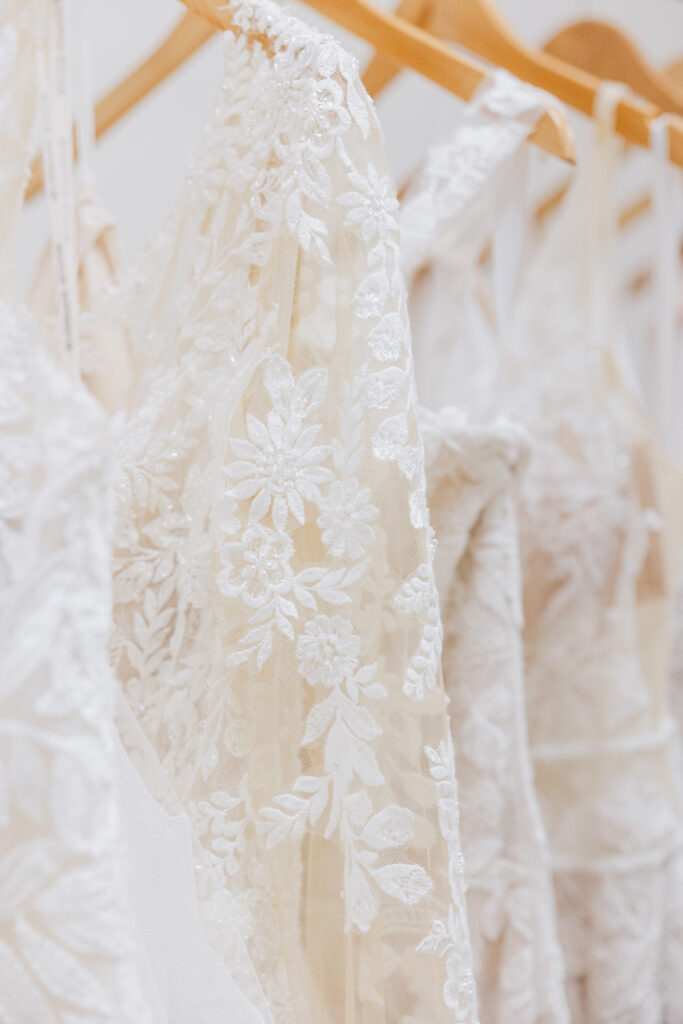
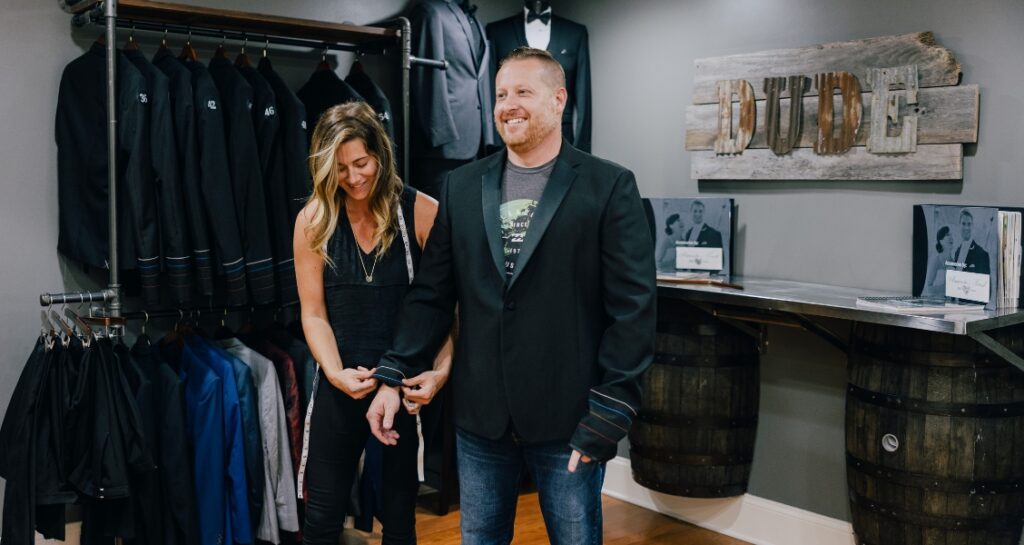
Choosing a bridal gown size starts with accurate measurements, not with guessing based on the size you normally wear. Your bridal stylist will typically consider areas such as your bust, waist, and hips, then compare those measurements with the designer’s size chart. The most important measurement can also depend on the construction of the gown. A fitted silhouette may require extra attention through the hips, while another style may need to fit correctly through the bust or waist first.
Every Designer Can Fit Differently
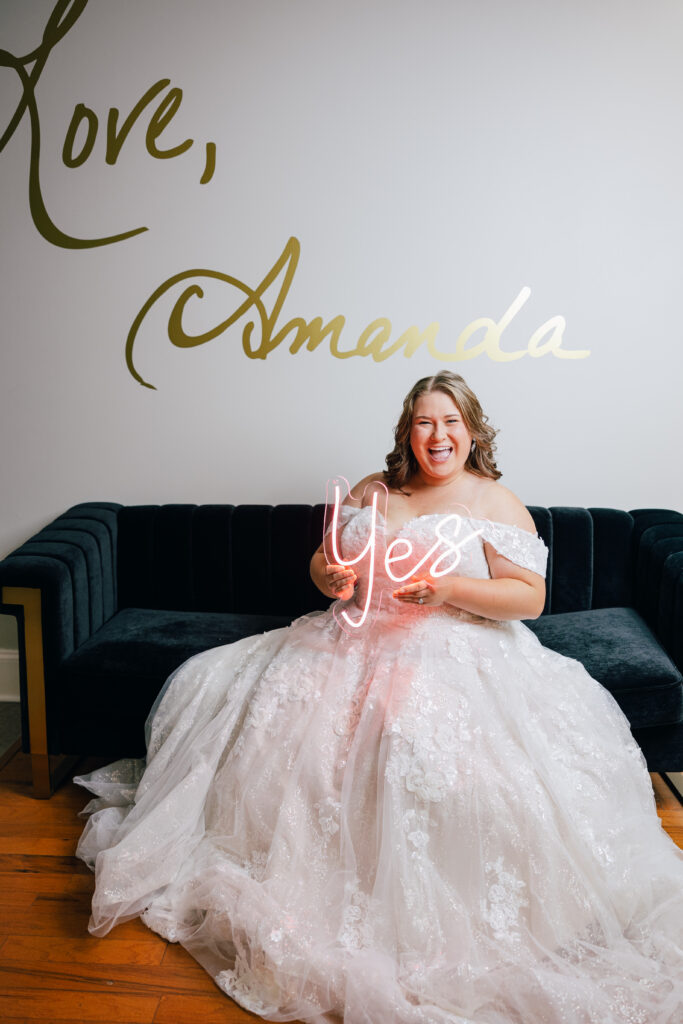
Bridal dress sizes are not completely standardized across the industry, which is why comparing yourself from gown to gown can quickly become frustrating. Fabric, structure, boning, seams, and silhouette can all affect how a dress fits your body. Even two gowns from the same designer may feel different depending on how they are made. Your bridal stylist understands how these details affect fit and can help determine the best size to order without placing unnecessary importance on the number printed inside the wedding dress.
Wedding Gowns Are Designed for Alterations
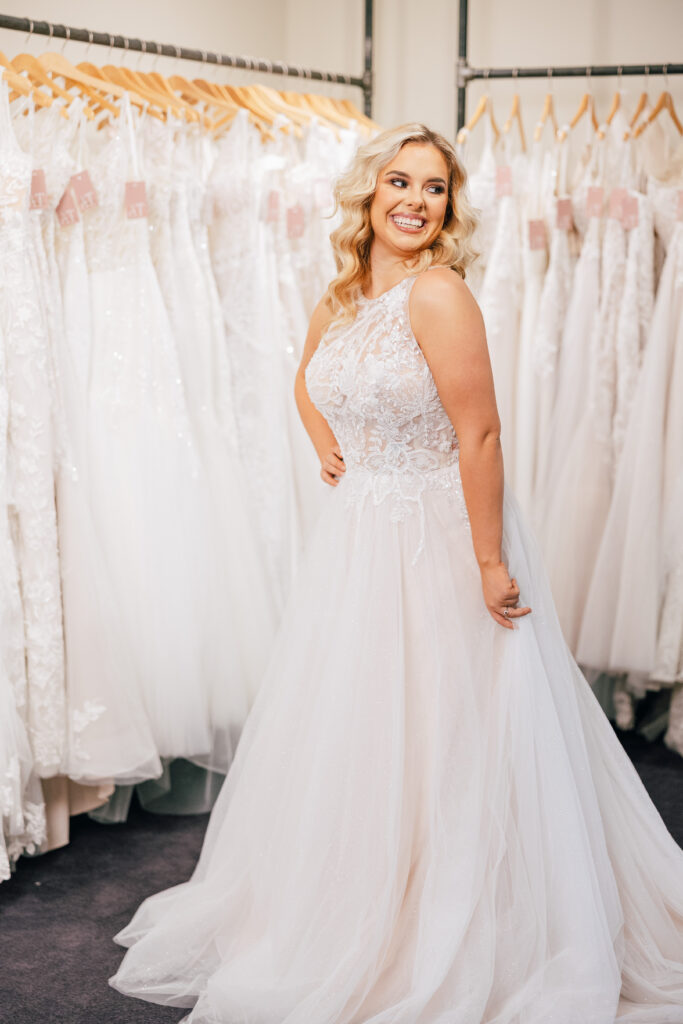
Bridal gown sizing is only the starting point for creating the final fit. Wedding dresses are made with alterations in mind, so your gown is not necessarily expected to fit every part of your body perfectly when it first arrives. A seamstress can adjust the waist, refine the bodice, alter straps, perfect the hem, and address other details based on your proportions. Those changes help shape the gown to your body and create the polished, personalized fit you pictured for your wedding day.
Trust Your Stylist With the Numbers
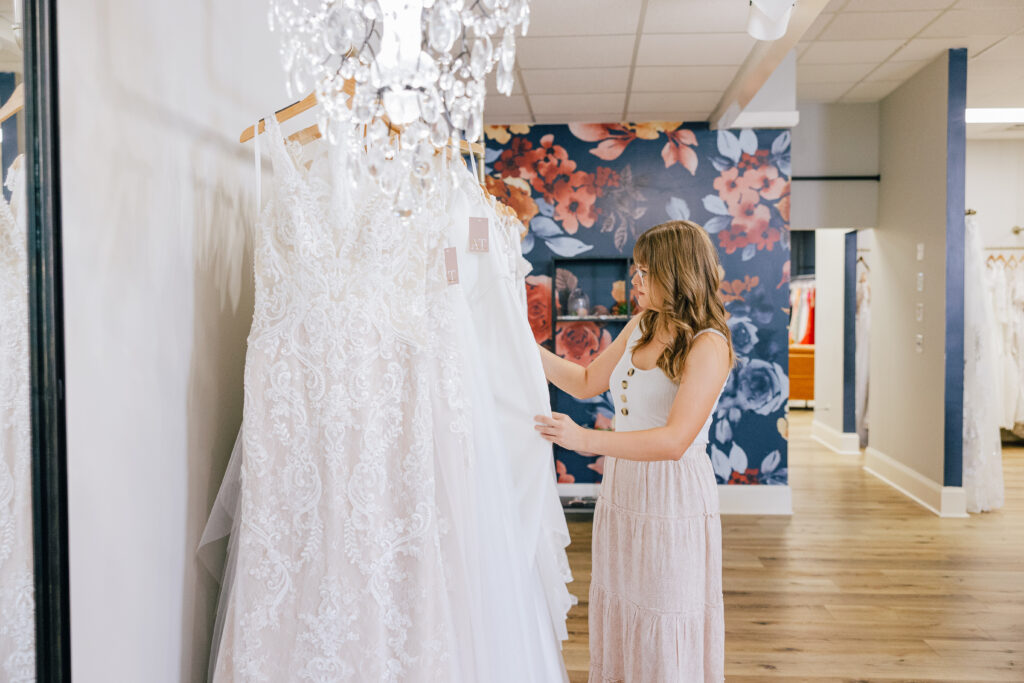
One of the best things you can do during your bridal appointment is let your bridal stylist handle the sizing details. They will take your measurements, consider the construction of your gown, review the designer’s chart, and recommend the size that gives your seamstress the best possible starting point. The number itself does not define how beautiful you look in your dress. What matters is finding a gown you love and allowing the fitting and alterations process to make it feel truly yours.
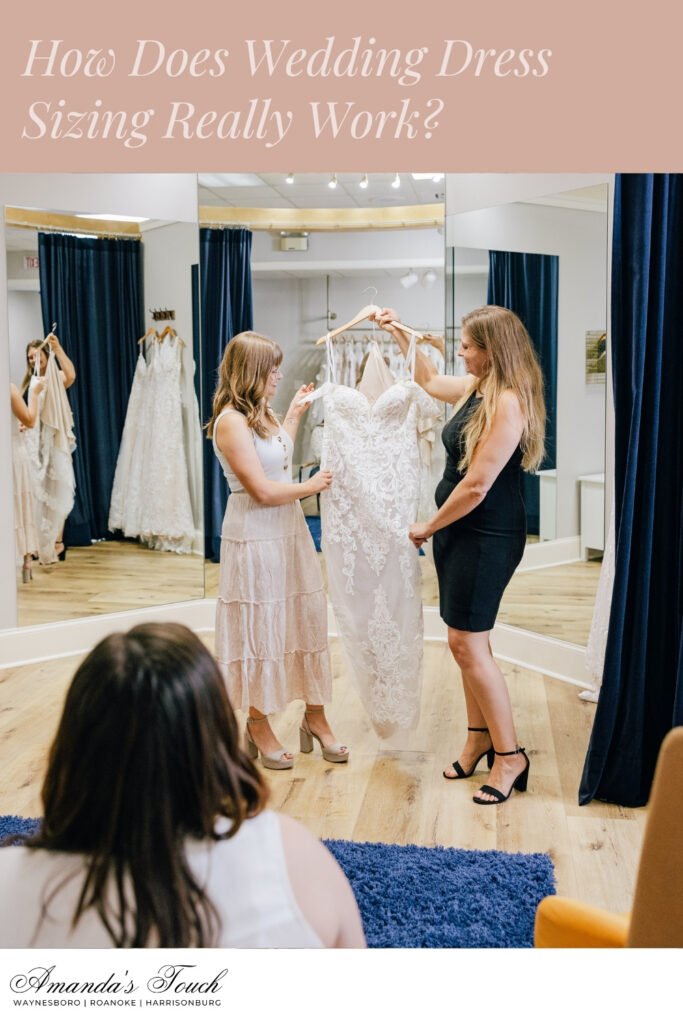
Bridal shopping should be about finding a gown that makes you feel confident, beautiful, and excited for your wedding day. At Amanda’s Touch, our stylists are here to guide you through the details that can feel confusing, including measurements, designer charts, ordering, and alterations. You can focus on the moment when a gown feels right while we focus on getting the fit process started correctly. Forget the tag, trust your stylist, and enjoy finding your dress without worrying about wedding dress sizing.